The Dynamics of Engagement: Game Mechanics Meeting Promotional Offers in Britain's Licensed Casino Sector
Written by Riley Zimmermann · Jul 11, 2026
The Dynamics of Engagement: Game Mechanics Meeting Promotional Offers in Britain's Licensed Casino Sector
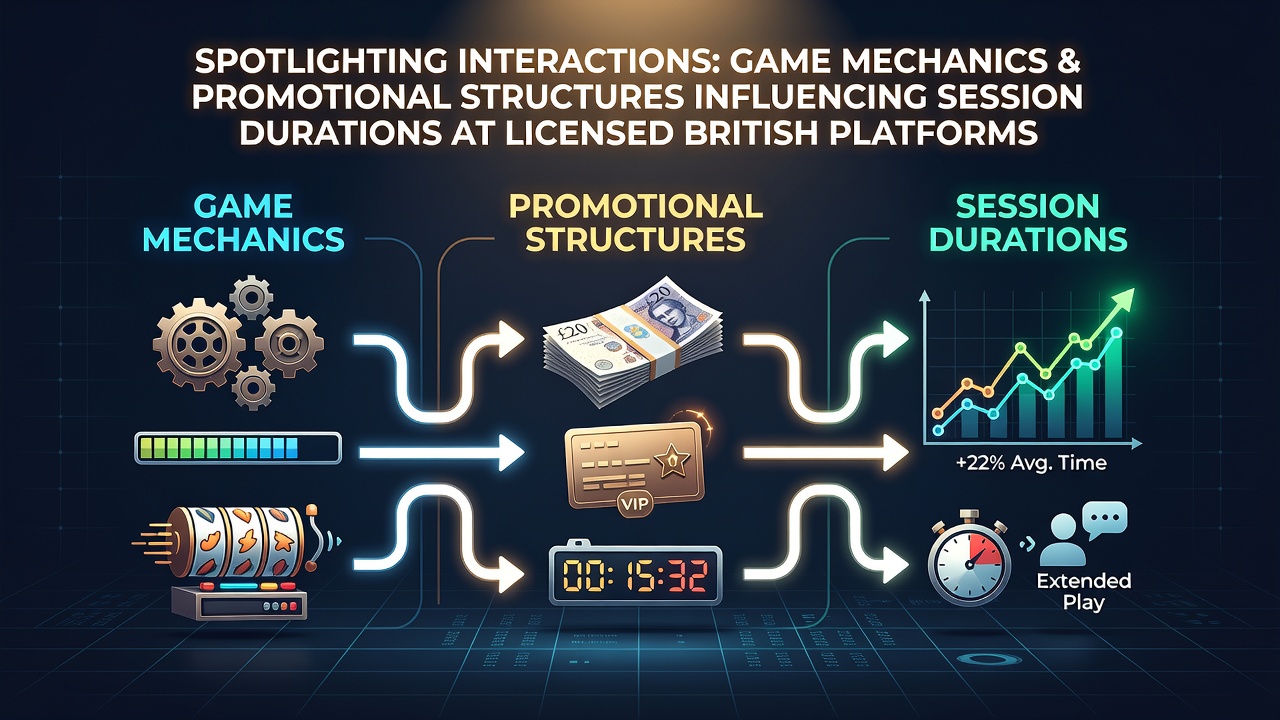
Game mechanics in digital slots and table games interact with promotional structures in ways that shape how long players remain active on licensed British platforms, according to industry analyses conducted through 2026. These interactions often revolve around return-to-player percentages, volatility settings, and feature triggers that align with bonus wagering conditions to extend individual sessions. Data from regulatory monitoring bodies shows average session lengths varying between 25 and 45 minutes depending on the combination of these elements, with certain mechanics creating loops that encourage continued play.
Volatility levels determine payout frequency and size, while promotional offers such as matched deposits or loyalty points introduce additional layers. When a low-volatility game pairs with a bonus that requires multiple rounds to clear, session durations tend to stretch because players work through the requirements at a steadier pace. Observers note that high-volatility titles, by contrast, produce shorter bursts interrupted by larger wins or losses, yet attached free-spin promotions can counteract this by adding mandatory play segments that keep users engaged longer.
Core Game Mechanics at Work
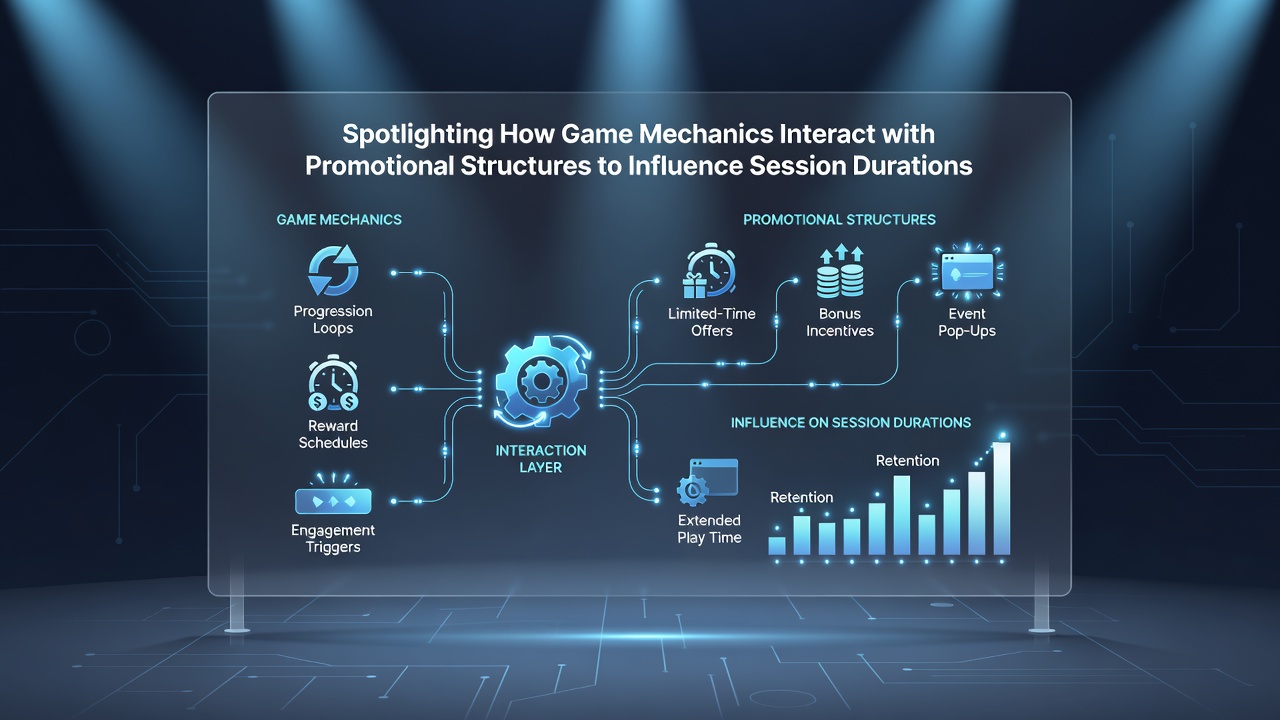
Mechanics like cascading reels, expanding wilds, and progressive multipliers create feedback loops where each spin feeds into the next without requiring new stakes. These features reduce the perceived break between rounds, and when combined with time-limited promotions that reset daily or weekly, they produce extended periods of continuous activity. Research from academic institutions across North America indicates that such loops increase average play intervals by 15 to 20 percent in controlled environments, a pattern that licensed operators in Britain have adapted to local stake regulations.
Paylines and reel structures further influence pacing because more complex grids demand additional decisions per spin. Players often remain active while exploring these options, particularly when promotions reward cumulative spins rather than single outcomes. Figures from European gaming associations reveal that titles with 20 or more paylines paired with reload bonuses record higher retention metrics than simpler three-reel formats during comparable promotional windows.
Promotional Structures and Their Layering
Promotions in the British market frequently include wagering multipliers that scale with deposit size, creating direct ties between initial funding and required play volume. These structures interact with game mechanics by setting thresholds that align with common feature activation rates. For instance, a 30-times wagering target on a bonus encourages selection of medium-volatility slots whose bonus rounds trigger often enough to satisfy conditions without excessive risk exposure. Data compiled through mid-2026 shows these pairings correlating with session extensions of up to 12 minutes on average across multiple platforms.
Loyalty programs add another dimension through tiered rewards that unlock after set play volumes. Points accumulate from both base game spins and promotional rounds, prompting users to continue until milestones appear. This system works alongside mechanic triggers such as near-miss animations, which studies from Australian research centers link to sustained engagement when reward ladders are visible on-screen.
Measured Interactions in Practice
Session data collected across licensed sites demonstrates clear patterns when mechanics and promotions overlap. A game with frequent small wins combined with a cashback offer on net losses tends to maintain activity because players chase recovery within the promotional window. In July 2026, updated reporting from international trade groups highlighted that such combinations produced the longest average durations in the 35-to-50-minute range among regulated markets outside North America.
Conversely, promotions limited to specific titles restrict choice and can shorten sessions if the selected mechanics do not resonate. Yet operators mitigate this through cross-promotions that transition users between games while preserving bonus status. Those who've examined transaction logs note that seamless transitions reduce drop-off rates by connecting one mechanic set directly to another under the same promotional umbrella.
Regulatory Context and Platform Adjustments
British licensing conditions impose stake caps and responsible gaming prompts that operators must integrate without disrupting promotional flow. These requirements lead to mechanic adjustments such as capped bonus round multipliers or slower reel speeds during promotional play. External analyses from Canadian provincial regulators show similar adaptations in other jurisdictions, where session length metrics remain stable despite added safeguards.
Operators track these effects through internal dashboards that flag when certain mechanic-promotion pairings exceed expected durations. Adjustments follow quickly, often involving recalibrated feature frequencies or modified bonus terms to maintain compliance while preserving engagement levels. The result appears in aggregated industry reports as consistent session patterns rather than dramatic spikes.
Conclusion
Interactions between game mechanics and promotional structures continue to define session durations on licensed British platforms through measurable alignments of volatility, feature triggers, and wagering conditions. Available data through 2026 illustrates how these elements combine without violating regulatory boundaries, producing predictable extensions in playtime across multiple formats. Continued monitoring by diverse international bodies will track whether these patterns evolve with new mechanic innovations or promotional formats.