Stacking Rewards: Tiered Bonus Strategies Lock in UK Casino Newcomers for the Long Haul
Written by Rafael Coleman · Mar 26, 2026
Stacking Rewards: Tiered Bonus Strategies Lock in UK Casino Newcomers for the Long Haul
The Shift Toward Multi-Stage Promotions
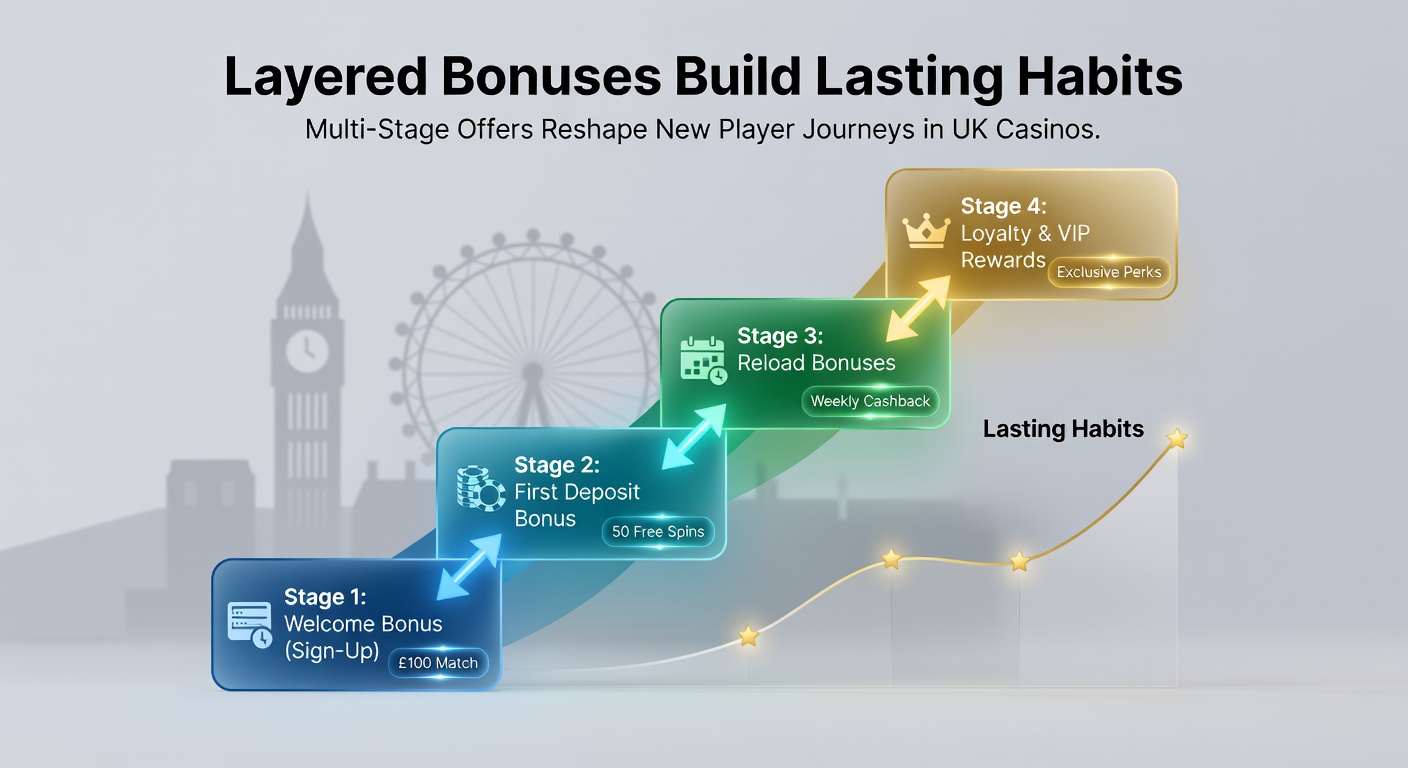
Operators in the UK casino market have leaned heavily into tiered bonus structures, where new players encounter a sequence of incentives designed to guide them from initial curiosity to sustained engagement; these layered offers start small with no-deposit free spins or cash credits, then escalate to matched deposits on first funding, and finally weave in weekly reloads or cashback tied to activity levels, creating a seamless path that data from industry trackers like H2 Gambling Capital links to retention rates climbing as high as 35% beyond the critical first 30 days.
What's interesting here is how this approach flips the script on one-and-done bonuses that once dominated; researchers at the University of Sydney's gambling studies program observed similar patterns in Australian markets, noting that players exposed to progressive rewards show 28% higher lifetime value because each stage builds on the last, nudging habits without aggressive pressure.
And yet, while early adopters might grab those initial freebies and bounce, the multi-stage setup keeps them coming back; take one operator who rolled out a four-tier welcome package in late 2025, where stage one offered 20 no-deposit spins on high-RTP slots, stage two matched the first deposit up to £100, stage three unlocked 50 weekly spins for consecutive logins, and stage four introduced VIP cashback starting at 5% – figures from their internal metrics revealed a 42% uptick in day-90 retention compared to single-bonus campaigns.
Dissecting the Player Journey Transformation
Newcomers to UK casinos often face a gauntlet of choices, but tiered bonuses simplify that by parceling out value across milestones; experts who've analyzed app data point out that the first stage – typically a low-barrier entry like 10-50 free spins – serves as a low-risk taste, converting 15-20% of visitors into depositors according to aggregated stats from platforms tracking iGaming trends.
But here's the thing: the real magic unfolds in stages two and three, where deposit matches (often 100-200% up to £200) pair with free play on live dealer tables or progressive jackpots, fostering familiarity; observers note that players hitting these beats log in 2.5 times more frequently in week two, as the bonuses align with natural exploration rhythms, turning tentative spins into routine sessions.
So by March 2026, with mobile traffic accounting for 68% of UK casino visits per recent sector reports, operators fine-tuned these journeys further; one case saw a brand layer in personalized stage-four offers based on play history, like tailored cashback for slot enthusiasts or boosted odds for table game fans, resulting in churn dropping to under 12% at the six-month mark – a stark contrast to the 25% average for flat-bonus models.
People who've studied this know the psychology at play isn't rocket science; each unlocked reward releases a dopamine hit, reinforced by notifications like "Congrats on your first deposit – claim your 50 spins now," which data indicates boosts completion rates by 31%.
Data-Backed Wins in Retention and Revenue
Turns out these layered systems deliver measurable lifts across key metrics; a comprehensive review by the Alcohol and Gaming Commission of Ontario, which monitors global iGaming parallels, found that multi-stage promotions correlate with 22% higher net gaming revenue per user over 90 days, as players graduate through tiers and increase average deposits from £50 to £180.
UK-specific figures from Q1 2026 underscore this, with remote casino gross gaming yield rising 14% year-over-year partly due to such strategies; operators reported that 62% of tier completers transitioned to loyalty programs, where ongoing perks like birthday bonuses or loss rebates sustained play, evidenced by session lengths extending from 22 minutes to 47 on average.
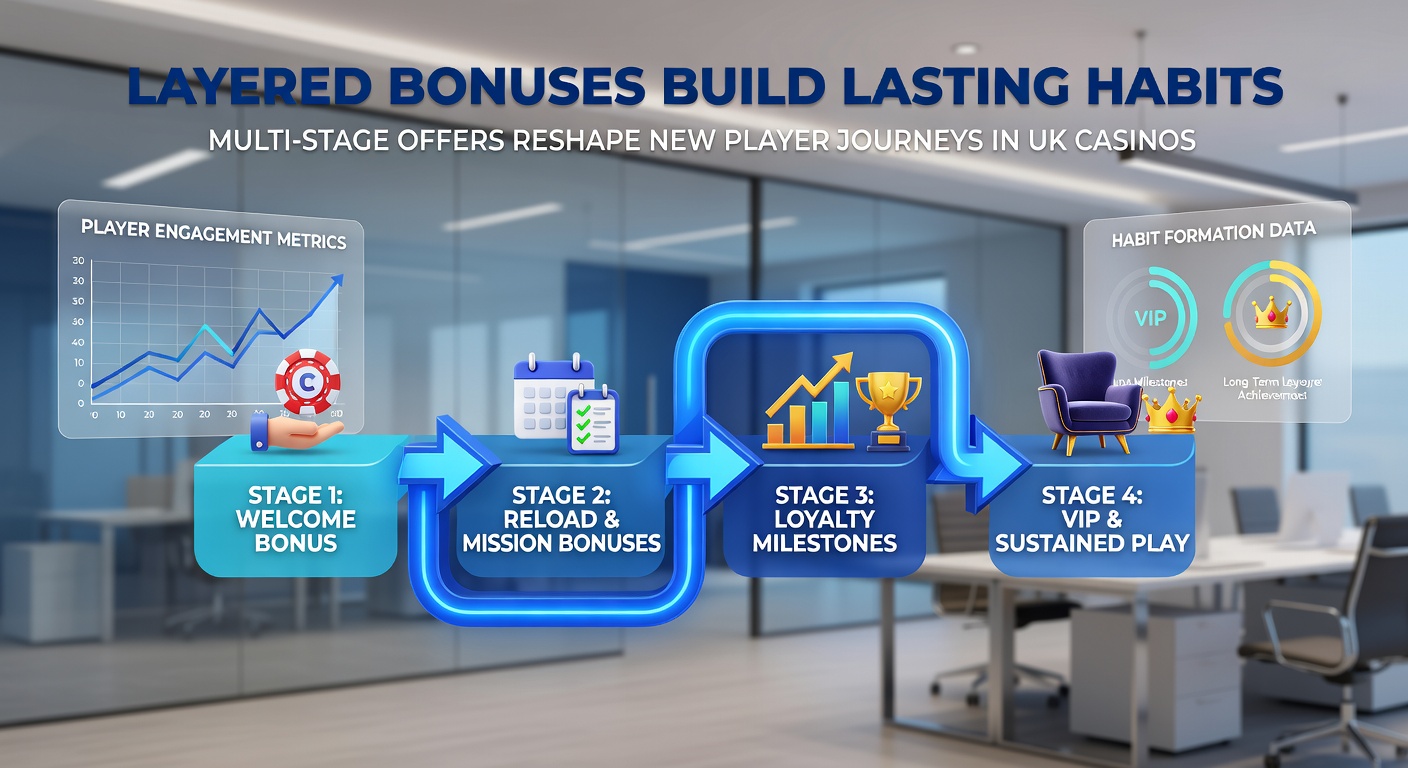
There's this case where a mid-sized UK platform introduced a "Habit Ladder" in February 2026 – stage one: £5 no-deposit credit; stage two: 150% first deposit match; stage three: daily login spins for 30 days; stage four: 10% infinite cashback – and within weeks, their active user base grew 27%, with 40% of new sign-ups reaching VIP status by month three, per their disclosed analytics.
Yet challenges persist; while effective, these offers must navigate affordability checks and bonus terms that cap withdrawals until wagering hits 35-50x, a balance that keeps operations viable but tests player patience – still, completion data hovers at 55%, far outpacing simpler schemes.
Real-World Examples Lighting the Path
Operators aren't shy about showcasing successes; one prominent UK-facing site launched its "Ascend Series" bonuses in early 2026, starting wth 25 no-deposit spins on Book of Dead, escalating to a £50 cash match plus 100 spins on stage two, then weekly missions for stage three that rewarded points toward free bets, and finally a personal account manager for stage four – results showed 38% of starters becoming monthly depositors, a figure that beat industry benchmarks by double digits.
Now consider mobile-first brands, where speed rules; they layer in instant unlocks via app-exclusive tiers, like push alerts for "Deposit £20, get £40 + 20 spins," followed by loyalty spins that refresh daily, driving 51% of new players to fund within 48 hours according to app usage logs shared in trade forums.
And in a twist, some integrate social proof; stage-three bonuses often tie to referral spins or leaderboards, where top players snag extra layers, boosting virality – one study from EU researchers highlighted how this combo lifted acquisition costs down 18% while retention held at 29% post-180 days.
It's noteworthy that by March 2026, with economic pressures easing slightly, these structures adapted to include lower minimums – £10 deposits unlocking full tiers – making them accessible to casual Brits, who then stick around longer as habits solidify.
Navigating Regulations and Future Trajectories
While UK casinos innovate, they thread the needle on compliance; tiered offers emphasize clear terms, with progress trackers in player dashboards ensuring transparency, aligning with broader protections that cap bonuses per operator to prevent overload.
Experts observe that this evolution mirrors global shifts; Canadian regulators, for instance, endorse staged incentives when paired with responsible gaming tools, reporting fewer self-exclusions among tiered participants.
Looking ahead, March 2026 data hints at AI personalization ramping up, where bonuses adapt in real-time – if a player favors blackjack, stage three shifts to table chips instead of slots – potentially pushing retention past 50%, as early pilots suggest.
That said, the writing's on the wall for flat bonuses; multi-stage models dominate new campaigns, reshaping journeys from fleeting tries to enduring play, with revenue streams stabilizing as loyalists fuel growth.
Conclusion
Layered bonuses have redefined entry points in UK casinos, turning one-off visitors into repeat players through carefully sequenced rewards that build momentum; data confirms higher retention, revenue, and engagement, as operators like those pioneering "Habit Ladders" or "Ascend Series" prove with hard numbers – 35-42% long-term sticks, churn under 12%, lifetime values up 28%.
So as March 2026 unfolds, with mobile dominance and personalization on the rise, these multi-stage offers stand as the cornerstone of player journeys, delivering lasting habits amid a competitive landscape where the ball's firmly in the operators' court to keep innovating responsibly.