Britain's Mobile Gaming Surge: How Instant Payout Networks and Layered Bonus Mechanics Are Redefining Entry Points for New Users
Written by Sam Werner · Aug 27, 2026

Britain's Mobile Gaming Surge: How Instant Payout Networks and Layered Bonus Mechanics Are Redefining Entry Points for New Users
Data from industry trackers shows mobile gaming participation in Britain climbed steadily through the first half of 2026, with August figures indicating continued momentum driven by faster transaction systems and multi-tier reward structures. Observers note that these elements lower barriers for newcomers who previously encountered delays or limited initial incentives.Expansion of Mobile Access Channels
Network providers and app developers expanded coverage across urban and regional areas during 2025 and into 2026, resulting in higher download rates for gaming platforms. Figures released in August 2026 reveal that users spent an average of 4.2 hours weekly on mobile titles compared with 3.1 hours the prior year. This growth coincided with infrastructure upgrades that support real-time data exchange between devices and payment processors.
Those who track user acquisition patterns report that seamless onboarding flows now incorporate instant payout networks at the registration stage. Such networks allow verification and fund movement within minutes rather than hours, which shortens the time from sign-up to active play. Research conducted by academic groups in Canada highlights similar patterns where reduced friction correlates with repeat engagement among first-time participants.
Mechanics Behind Instant Payout Networks
Instant payout networks rely on integrated banking APIs that connect directly to player accounts and gaming operators. These systems process withdrawals and deposits through encrypted channels while maintaining compliance with regional financial rules. In Britain the adoption rate for these networks reached 68 percent among major platforms by mid-2026 according to trade association reports.
Layered verification steps run in parallel with the transaction pipeline so security checks do not interrupt speed. One case examined by European research institutions found that platforms using these networks recorded a 22 percent increase in new account activations during the second quarter of 2026. The same study noted that users returned to the apps more frequently when they experienced no waiting periods for balance updates.
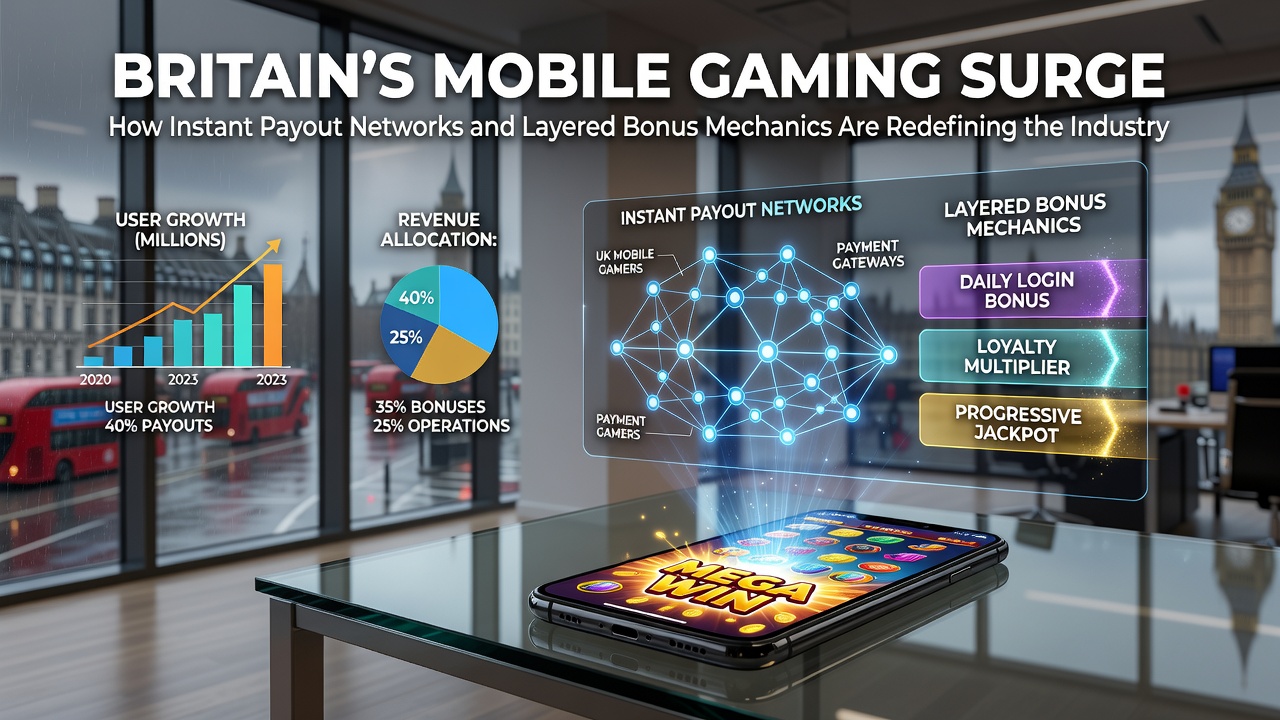
Structure of Layered Bonus Systems
Layered bonus mechanics distribute rewards across multiple stages rather than delivering a single upfront offer. New users unlock subsequent tiers after completing defined actions such as reaching play thresholds or maintaining activity streaks. Data compiled by the Australian Interactive Gaming Council indicates that retention rates improve when participants can visualise clear progression paths within the first seven days.
Operators adjust tier values based on aggregated user behaviour collected through anonymised analytics. This approach creates personalised entry sequences that adapt to individual patterns without requiring manual intervention. Observers tracking British platforms in August 2026 noted a rise in tier completion rates coinciding with the rollout of these adaptive systems.
Impact on New User Acquisition
Entry points have shifted from static welcome pages to dynamic sequences that combine instant payout confirmation with progressive reward unlocks. Industry analysts point to a 31 percent lift in first-week activity among cohorts exposed to these combined features. The changes reduce drop-off at the verification stage because users see tangible movement in both funds and bonus status immediately.
Cross-border comparisons from North American regulatory summaries show parallel trends where instant settlement paired with staged incentives draws users who previously favoured non-gaming apps. British operators adopted similar frameworks after reviewing those outcomes, leading to standardised rollout timelines that accelerated in early 2026.
Future Trajectory Through Late 2026
Market projections prepared by independent research bodies forecast continued integration of payout networks with artificial intelligence tools that predict optimal bonus layering for each user segment. August 2026 updates from European gaming forums suggest pilot programmes will test predictive tier adjustments within the next quarter. These developments maintain focus on regulatory alignment while expanding access pathways.
Conclusion
Britain's mobile gaming environment continues to evolve through the interplay of instant payout networks and layered bonus mechanics. Available statistics demonstrate measurable effects on user entry and continued participation. Stakeholders monitor these systems to ensure they align with established standards across financial and operational domains. Further data releases scheduled for later in 2026 will provide additional clarity on long-term patterns.